Main menu
- Resort in Bahrain
- Bioremediation
- Geotextiles
- Staple fibre
- Biogas power plants
- Wastewater treatment
- Company
- Contact


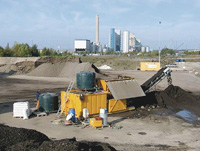
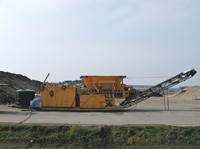
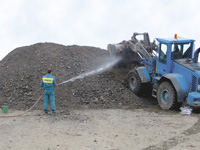
In the Czech Republic are present a relatively high number of domestic and foreign firms dedicates to the decontamination of various pollutants through biotechnological means. Practical
results clearly show the advantages of applying these methods in the various fields of waste likvidation.
The focus of bioremediation is generally dedicated to the decontamination of soil and water which has been polluted by oil products. In these instances it is possible to reach a high level of effectiveness with relatively low financial expenditures. Generally, there are two basic ways which are implemented:
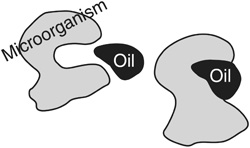 Microorganisms eat oil or other
organic contaminant
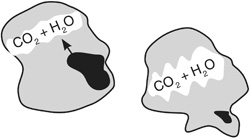 Microorganisms digest oil and convert it
to carbon dioxide (CO2) and water (H2O)
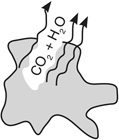 Microorganisms give off CO2 and H2O
Also, in this time, new procedures are being studied with the goal being to increase biotechnological effectiveness using mixed bacteria cultures. From experience, occasions are known to exist where the very high effectiveness of prepared biological solutions was obtained through the synergic activity of present microorganisms. While the independently isolated bacteria aren’t able to oxidate hydrocarbons, the combined bacteria are able to create a very effective symbiosis.
The decontamination is done in two ways. One method is the excavation of contaminated soil and replacement with a clean soil (this is called Off-Site decontamination). The other procedure consists of cleaning the soil in place (this is called On-Site decontamination). There are four different methods;
Before and during the use of biotechnology, general physical and chemical conditions are controlled which are important for sustaining the life of microorganisms. The success of the process is highly dependent on the specific soil and chemical properties of the contaminated material. This technology is particularly useful where rapid remediation is a high priority.
First, a firm which is considering using biotechnology must posses documentation that identifies the kinds of microorganisms to be used. These documentations are available from the Czech Collection of Microorganisms (CCM) at Masarykova University in Brno. The CCM is internationally recognized according to the Budapest Treaty. At the same time, this identification documentation is the basis for all patent negotiations in this field. Also, from the State Health Institute, the firm must have approval as to the non-toxicity and non-pathogenity of the used bacterias; the approval for the method of application; and, permission to produce the prepared biological solution. Furthermore, from the State Health Ministry (a separate entity) approval is also needed. And finally, the realization of each biotechnology project must be consulted and coordinated through District Environmental Offices.
Recently, experiments have taken place to determine the possibility of using biotechnology to degredate contaminants other than Petroleum Hydrocarbons in geological space, especially Chlorinated and Aromatic Hydrocarbons, pesticides, and PCB’s. Mostly various mixed cultures of bacteria, yeast-plants, and fungi were tested. In comparison with hydrocarbons the effectiveness is considerably lower.
Many of the contaminated places in the Czech Republic are areas where Soviet military troops were formerly stationed. For the most part, these are very large devastated areas with a high level of contaminated soil and groundwater. For example, the area of Hradcany has more than 3 square kilometers of oil product and chlorinated hydrocarbon contamination. It is speculated that up to 3.000 cubic meters of ground water are polluted with oil products. In the area consisting of the former Czechoslovakia, this situation and these conditions can be seen over and over again. In addition to the old Soviet installations there are several Czech military bases, especially military airports, which are similarlly contaminated.
Decontamination of several areas has been submitted for tenders, but at this time the problem of financial security for the various projects hasn’t been solved. In other words, no one knows who’s going to pay for what.
Now, in the Czech Republic, exists a radical privatization process which requires, among other things, ecological assessments. Ecological damage of extreme extent is present in most industrial areas. Soil and groundwater contamination has been discovered in most enterprises. Hydrocarbon contamination prevails. In the other countries of Central and Eastern Europe exists a similar situation. Another problem is the general lack of finances, from both private enterprises and government institutions, to pay for decontamination projects.
BD is a dynamically developing company working towards a better natural environment in the Czech Republic. Incorporating specialists in geology, chemistry, biology, engineering, and computer technology is highly qualified to solve problems in the following ways:
Our basis for biotechnology is the use of mixed microbiological cultures. The main practice is to create microorganisms which originate from oil and gas deposits. These bacteria display very high degradation activity after creating optimum conditions. One of these conditions is the synergic contact with selected other microorganisms. Microorganismic metabolic products highly accelerate oxidation of hydrocarbons through the use of mixed cultures. During the process of fermenting mixed cultures it is necessary to keep the specific physical and chemical properties of the environment which were specified during experimentation. Given ideal conditions, the applications of this technology can obtain a 90 to 95 % reduction of oil contamination in soil within a 2 to 3 month period. This microbiological solution is non-toxic and non-pathogenic for living organisms.
During the development and testing of mixed culture application it was discovered there exists a very high degradation capability under optimum conditions. The culture was applied to a 3 hectare water reservoir which has a continuing influx of contaminated water consisting of 20 mg/l oil products containing PCB’s.
With good water aeration, even unexpectedly high oil product intrusions were broken down with the mixed culture method in 4 to 6 days. Furthermore, indigenous fish examined under laboratory conditions were found to be unharmed by the use of the mixed culture solution.
Recently, BD has been investigating the ability of the mixed culture solution to break down PCB’s however, results are not yet available.
In the case of extreme environmental conditions we mostly apply using of autochronous microbial populations. We have experience from polar circle, where temperature of groundwater was constant during the year (only 4 °C). Because temperatures in the Gulf would be also extreme, we prefer to make multiplication of autochtonous populations from contaminated sand amended with our thermophilic strains.
Our technology is very flexible and could be used for ex-situ treatment of contaminated soil, rubble, hazardous waste and waste oil sludge on decontamination plateau. In-situ treatment of soil and groundwater in a contaminated aquifer is performed at contaminated sites in combination with physical or physicochemical treatment technologies.
Aliphatic hydrocarbons, BTEX, some polycyclic aromatic hydrocarbons (up to 5 condensed aromatic rings), alcohols, organic acids, some fire extinguishers, phenols, fatty acids, alkyl derivatives of aliphatic hydrocarbons, chlorinated hydrocarbons (aliphatic and aromatic) and many more.
Concerning raw oil pollution, the ability of bacterial consortia is to degrade most of constituents with exception of asphaltenes and tars. It means that the rest concentration of oil hydrocarbons after treatment of raw oil pollution it is equal to content of tars and asphaltenes in raw oil in the beginning of treatment.
We suppose that all remediation could be done using equipments at hand in Bahrain or somewhere in the Gulf.
Bacteria will be transported as a concentrate (at maximum 1 kg of weight). All bacterial suspension needed for treatment will be prepared on site – cultivation under selection pressure to protect against contamination.
When all substrate will be consumed and treated send will let dry for several days, the activity of bacteria will be terminated because no spore forming strains are used.